
A potential risk of frequent repeated use of serotonergic psychedelics is cardiac fibrosis and valvulopathy caused by serotonin 5-HT2B receptor activation. Serotonergic psychedelics are agonists not only of the serotonin 5-HT2A receptor but also of the serotonin 5-HT2B receptor and other serotonin receptors. Psychedelic drugs are addictive psychologically, with little to no physical addiction in classical psychedelics. Some drugs, such as MDxx compounds like MDMA and MDA as well as α-alkyltryptamines like α-methyltryptamine (AMT), are entactogens and/or stimulants acting at monoamine transporters in addition to having varying degrees of psychedelic effects. 5-MeO-DiPT and 5-MeO-MiPT have unique and unusual effects at typical doses including tactile and sexual enhancement, mild entactogenic effects, and only light hallucinogenic effects. Some rare individuals do not experience hallucinogenic effects with serotonergic psychedelics.
Scientific Models
Flashbacks are psychological episodes where individuals re-experience some of LSD's subjective effects after the drug has worn off, persisting for days or months post-hallucinogen use. A 2010 study by David Nutt ranked LSD as significantly less harmful than alcohol, placing it near the bottom of a list assessing the harm of 20 drugs. The time to peak effects given orally is 2.2 to 2.8 hours on average, with a range of 1.3 to 6.5 hours. Noticeable effects can occur with doses of LSD as low as 20 μg, which is around 1/200th the mass of a grain of sand. This means that it produces its pharmacological effects at very small doses, with its dose range measured in micrograms (μg); that is, millionths of a gram.
Side Effects
A few different individual accounts of the effects of ALD-52 were described by Shulgin. In other publications however, he gave a dose range of 100 to 200 μg orally. In his book TiHKAL (Tryptamines I Have Known and Loved), Alexander Shulgin briefly discusses ALD-52, giving a dose range of 50 to 175 μg orally and no onset or duration mentioned.
The altered states of consciousness induced by psychedelics can increase patients' suggestibility and vulnerability, necessitating rigorous ethical standards and oversight. The inherently unpredictable and often ineffable nature of psychedelic experiences can make it difficult for patients to fully comprehend and anticipate potential psychological risks. Critics have raised concerns about the overenthusiastic framing of psychedelics as a universal or revolutionary solution, cautioning that such narratives may overshadow limitations in clinical evidence, long-term safety data, and equity in access. Although psychedelic therapy has shown promise in treating a range of mental health conditions—including depression, PTSD, and substance use disorders—it has also generated significant debate across ethical, cultural, and scientific domains. Hypnodelic therapy, as the name suggests, was developed with the goal to maximize the power of hypnotic suggestion by combining it with the psychedelic experience. With the intense emotional episodes that came with the psychedelic experience, Martin and McCririck aimed to sit in as the "mother" role who would enter into close physical contact with the patients by rocking them, giving them milk from a bottle, etc.page needed
Influential Individuals
The related psychedelic 5-MeO-DMT was first synthesized by Japanese chemists Toshio Hoshino and Kenya Shimodaira in 1935. However, the findings of these studies were conflicting, and bufotenin developed a long-standing reputation of being inactive and toxic. Sandoz Pharmaceuticals began distributing tablets of psilocybin under the brand name Indocybin in 1960.
All three isomers of LSZ fully substituted for LSD in rodent drug discrimination tests, but the (S,S)- isomer was the most potent and was the only isomer that was more potent than LSD. The duration of LSZ is reported to be in the range of 3 to 11 hours, with a median duration of around 8 hours. This dose range is notably higher than that of LSD, which is 50 to 200 μg with a typical dose of about 100 μg. LSZ, as the (S,S)- isomer LA-SS-Az, has been reported to have a dose range of 100 to 200 μg or 100 to 300 μg orally, with a typical dose estimate of 150 or 200 μg. 1V-LSD is the condensation product of valeric acid (pentanoic acid) and LSD, where the valeroyl group is substituted on the NH position of the indole moiety.
Other Drugs
Shortly thereafter, it was found that LSD showed serotonin-like effects and could antagonize serotonin in certain assays. NBOMe psychedelics such as 25I-NBOMe, derived from structural modification of 2C psychedelics, were first described by Ralf Heim and colleagues by 2000. American chemist David E. Nichols has developed numerous novel psychedelics and entactogens from the 1970s to present.
Psychedelic Subculture Goes Mainstream
{A head-twitch response assay in mice found that 1V-LSD has a similar potency to 1P-LSD and 1cP-LSD, with behavioral effects also closely resembling these structural analogs. A former CIA employee, whose name is known as Walter Pasternak, was noted for "hiding from investigators" stating that he would return after 24 hours. In 1974, The New York Times journalist Seymour Hersh published a story exposing the CIA's illegal spying on U.S. citizens and how the CIA had conducted non-consensual drug experiments. } a debate over how ethical White's actions were, with some arguing that if his motive was to legally make people suffer, he was unethical, while others argue that if he believed that the experiments would benefit national security, his actions could be justified.|These challenges complicate the process of obtaining fully informed consent, especially in therapeutic contexts where long-term monitoring or integration support may be limited. Critics have raised significant concerns regarding the ethical implications of psychedelic-assisted therapies, particularly focusing on the challenges surrounding informed consent and patient safety. In response, scholars have called for a more cautious, interdisciplinary approach that considers social context, informed consent, community frameworks, and culturally responsive practices.|It follows therefrom that ʟsᴅ, which hitherto had been considered to be a synthetic product of the laboratory, actually belongs to the group of sacred Mexican drugs. Paspalic acid then undergoes isomerization of the C-C double bond in conjugation with the acid to form D-lysergic acid. Ergine is not a biosynthetic endpoint itself, but rather a hydrolysis product of lysergic acid hydroxyethylamide (LSH), lysergic acid propanolamide (ergonovine), and ergopeptines or their ergopeptam precursors. Ergine, also known as lysergic acid amide (LSA) or as lysergamide, is a ergoline and lysergamide.|Their experiences influenced works such as the Beatles' Sgt. Pepper's Lonely Hearts Club Band and Cream's Disraeli Gears, featuring psychedelic-themed music and artwork. In the United Kingdom, Michael Hollingshead, reputed for introducing LSD to various artists and musicians like Storm Thorgerson, Donovan, Keith Richards, and members of the Beatles, played a significant role in the drug's proliferation in the British art and music scene. The use of graphics on blotter sheets originated as an underground art form in the early 1970s, sometimes to help identify the dose, maker, or batch of LSD. Their activities, including cross-country trips in a psychedelically-decorated bus and interactions with major figures of the beat movement, were later documented in Tom Wolfe's The Electric Kool-Aid Acid Test (1968). He said this would be a threshold dose based on the doses of other ergot alkaloids.|The psychedelic experience is often compared to non-ordinary forms of consciousness such as trance, meditation, yoga, religious ecstasy, dreaming and even near-death experiences. A psychedelic substance is a psychoactive drug whose primary action is to alter cognition and perception. Moreover, these products are new drugs as defined by section 201(p) of the Act, 21 U.S.C. § 321(p), because they are not generally recognized as safe and effective for use under the conditions prescribed, recommended, or suggested in their labeling. … Accordingly, these products are drugs, under section 201(g)(1)(C) of the Act, 21 U.S.C. § 321(g)(1)(C), because they are not foods and they are intended to affect the structure or any function of the body. In particular, the classes of stimulants that demonstrate possible cognition-enhancing effects in humans have evidence in vitro as direct agonists or indirect agonists of dopamine receptor D1 or adrenoceptor α2. Many dissociatives have general depressant effects and can produce sedation, respiratory depression, analgesia, anesthesia, and ataxia, as well as cognitive and memory impairment and amnesia.|Manufacturing LSD requires laboratory equipment and experience in the field of organic chemistry. The definition of "amount larger than small" is determined by judicial practice and specific regulations. In the United Kingdom, LSD is a Class A drug under the Misuse of Drugs Act 1971, making unauthorized possession and trafficking punishable by severe penalties.|The person must have had no recent hallucinogen use and must show no current drug toxicity. The term refers to a transient recurrence of disturbances in perception that are reminiscent of those experienced during one or more earlier “trips”. This has subsequently been disproved by numerous other studies.}
Other objectives included finding drugs that could incapacitate entire buildings via poisoned food, which would create "confusion-anxiety-fear," and other symptoms such as headaches and earaches. Many of the CIA operatives involved in the experiments voluntarily indulged in the drugs and prostitutes for recreational purposes. The victims were sometimes fed subliminal messages in attempts to induce them to involuntary actions, including criminal activity such as robbery, assault, and assassination. Operation Midnight Climax was established in order to study the effects of LSD on non-consenting individuals. George Hunter White, an agent at the Federal Bureau of Narcotics, and Ira "Ike" Feldman, a former military intelligence officer, who oversaw San Francisco experiments, noticed that subjects spoke far more freely when under the influence of a combination of drugs and sex. Unlike Artichoke, Midnight Climax gave Gottlieb permission to test drugs on unknowing citizens, which created the infamous legacy of this operation.
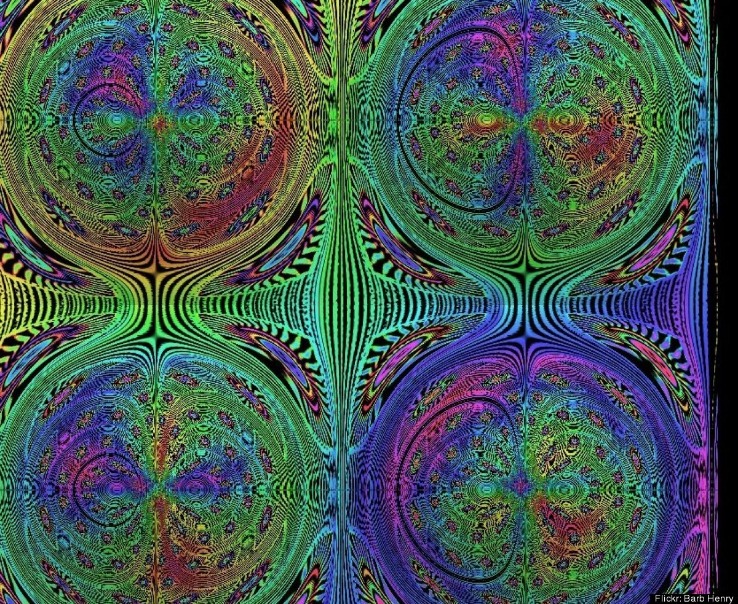
The mechanism of LSD's psychedelic effects is thought to be agonist (binding) activity at the 5-HT2A, 5-HT2C, and 5-HT1A receptor subtypes, with high affinities. Subjective effects include visual geometry / hallucinatory states, time distortion, enhanced introspection, conceptual thinking, increased music appreciation, euphoria, and ego loss. In 1966, James Fadiman conducted a study with the central question "How can psychedelics be used to facilitate problem solving?" This study attempted to solve 44 different problems and had 40 satisfactory solutions when the FDA banned all research into psychedelics. The researchers compared how LSD doses of 25 μg, 50 μg, 100 μg, 200 μg, or placebo impacted anxiety scores among study participants. A study published by the Journal of the American Medical Association in September, 2025 explored the optimal dose of LSD to lower patients' anxiety.
Psychedelic Therapy Centers
Some trips may cause a person to become paranoid about other people or things, and they might even become aggressive. What are the effects of a bad trip? Effects include hallucinations, sensory changes, intense mood swings, distorted time perception, and general loss of concentration. If you or a loved one is showing signs of an overdose, it’s a medical emergency. If a loved one or friend takes LSD, keep a close eye on them to make sure they don’t have negative effects. For instance, mixing LSD with alcohol can trigger nausea and cancel out any desirable effects.
Tips If You're Having A Bad Trip
American physician John Raleigh Briggs, living in Texas, learned of peyote from Native Americans and Mexicans, who told him that it produced "beautiful visions" and made them journey into the "spirit world". Spanish explorers observed the use of psilocybin-containing mushrooms (teonanacatl) in Mexico as early as 1519 with the arrival of Hernán Cortés. The use of hallucinogenic snuffs by indigenous South American people was first observed by Western explorers like Christopher Columbus as early as 1496. The earliest archeological evidence of the use of psychedelic plants and fungi by humans dates back roughly 10,000 years. Psychedelics occurring in plants, fungi, and animals have been used by indigenous peoples throughout the world for thousands of years. In contrast to phenethylamines and amphetamines generally, most psychedelic phenethylamines are not monoamine releasing agents.
Lysergic Acid Diethylamide (LSD)
- It was not until five years later on April 19, 1943, that the psychedelic properties were found.
- He began studying the medicinal plant Drimia maritima (squill) and the fungus ergot as part of a program to purify and synthesize active constituents for use as pharmaceuticals.
- There may be at least some truth to this legend, as a 2005 study found that a transdermal nicotine patch modestly enhanced the subjective "high" of cannabis relative to a placebo patch—but only in males.
- Share your experience and contribute to science!
- Leary continued to publicly promote psychedelic drugs and became a well-known figure of the counterculture of the 1960s; he popularized catchphrases that promoted his philosophy, such as "turn on, tune in, drop out", "set and setting", and "think for yourself and question authority".
- LSD is approximately 200 times as potent as psilocybin and 5,000 times as potent as mescaline, meaning that it produces effects of similar magnitude at 1/200 and 1/5,000 times the respective doses.
At lower doses, features of psychedelic experiences include sensory alterations, such as the warping of surfaces, shape suggestibility, pareidolia, and color variations. In the case of dried psilocybin-containing mushrooms, microdoses are 0.1 g to 0.3 g and psychedelic doses are 1.0 g to 3.5–5.0 g. A 2022 study recognized signatures of psilocybin microdosing in natural language and concluded that low amount of psychedelics have potential for application, and ecological observation of microdosing schedules. Psychedelic microdosing is the practice of using sub-threshold doses (microdoses) of psychedelics in an attempt to improve creativity, boost physical energy level, emotional balance, increase performance on problems-solving tasks and to treat anxiety, depression and addiction. After ingesting the drug, the patient normally wears eyeshades and listens to music to facilitate focus on the psychedelic experience, with the therapeutic team interrupting only to provide reassurance if adverse effects such as anxiety or disorientation arise. Studies conducted using psilocybin in a psychotherapeutic setting reveal that psychedelic drugs may assist with treating depression, anxiety, alcohol addiction, and nicotine addiction.

Anaclitic Therapy
Massive doses of LSD are largely managed by symptomatic treatments, and agitation can be addressed with benzodiazepines. The experiment was repeated in two elephants with similar doses of LSD in 1984 without incident. In general, psychedelics like LSD may rarely cause seizures in some individuals. This is thought to be due to the fact that they act as partial agonists of serotonin receptors like the serotonin 5-HT2A receptor relative to serotonin itself. LSD at typical recreational doses (~50–250 μg) is considered to be very safe in terms of toxicity, with not a single toxicity-related death having been reported at such doses despite many millions of exposures.
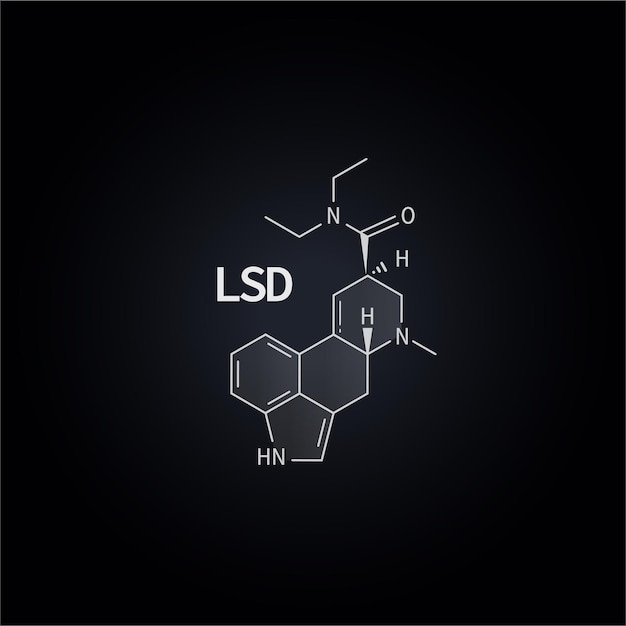
Most of the early studies of LSD for psychiatric conditions were of very low quality, often lacking even control groups. LSD was first published in the scientific literature by Hofmann and his colleague psychiatrist Werner Stoll in 1943 and the hallucinogenic effects of LSD were first published by Stoll in 1947. Hofmann discovered its effects in humans on April 16, in 1943, after unintentionally ingesting an unknown amount, possibly absorbing it through his skin. A notable bioisostere of LSD is JRT, the isotryptamine analogue of LSD and a psychedelic and psychoplastogen which is under investigation for the potential treatment of schizophrenia. Maximum plasma concentrations are typically observed 1.4 to 1.5 hours after oral administration of 100 μg and 200 μg, respectively, with a plasma half-life of approximately 2.6 hours (ranging from 2.2 to 3.4 hours among test subjects). The parent drug and its major metabolite are unstable in biofluids when exposed to light, heat, or alkaline conditions, necessitating protection from light, low-temperature storage, and quick analysis to minimize losses.
(+)-JRT does not have significant affinity for the serotonin 5-HT1B or 5-HT3 receptors, whereas its affinities for the other serotonin 5-HT1 receptors and the serotonin 5-HT4 receptor were not reported. It is also an agonist of the serotonin 5-HT1A and 5-HT7 receptors, an antagonist of the serotonin 5-HT5A and 5-HT7 receptors, and a ligand of the serotonin 5-HT6 receptor. It shows high affinity for the serotonin 5-HT2 receptors, with Ki values ranging from 2.0 to 184 nM. (+)-JRT is highly selective for a subset of serotonin receptors and does not bind to various dopamine, adrenergic, or histamine receptors, which is in contrast to LSD. It has significant but reduced psychedelic-like effects compared to LSD in animals. Since the late 1980s, there has also been a revival of hallucinogen research more broadly, which, in recent years, has included preclinical and clinical studies involving LSD and other compounds such as members of the 2C family compounds and psilocybin.
A June 2024 report by the RAND Corporation indicated that psilocybin mushrooms are currently the most widely used psychedelic drug among U.S. adults. MDMA ("ecstasy") is sometimes said to also have weak psychedelic effects, but it acts and is classified mainly as an entactogen rather than as a hallucinogen. Research has been conducted, however, and studies show that psychedelics are physiologically safe and rarely lead to addiction. Many psychedelic drugs are illegal to possess without lawful authorisation, exemption or license worldwide under the UN conventions, with occasional exceptions for religious use or research contexts. Classic psychedelics generally cause specific psychological, visual, and auditory changes, and oftentimes a substantially altered state of consciousness.
Such efforts aim not only to expand access but also to rebuild trust and ensure that psychedelic-assisted therapies are effective and ethical across diverse populations. To address these disparities, scholars and clinicians have called for more inclusive and culturally responsive research practices. A review of 18 psychedelic clinical trials found that 82.3% of participants were non-Hispanic White, with minimal inclusion of Black, Latino, Indigenous, and Asian individuals. In addition to these design limitations, demographic homogeneity remains a persistent issue in psychedelic research. For instance, many studies prioritize controlled environments and relatively healthy participants, thereby excluding those who may be most in need of innovative mental health treatments, such as individuals with trauma histories, substance use disorders, or severe depression. This includes establishing clear protocols for informed consent, ensuring transparency in clinical trial methodologies, implementing stringent ethical standards for therapists, and conducting thorough long-term follow-up studies to monitor patient outcomes.